NMN Supplements: The Complete Science-Backed Guide to NAD+ Boosting, Dosage, Benefits & Foods
📋 Table of Contents
- What Is NMN? The Biochemistry in Plain English
- How NMN Supplements Work in Your Body
- The NAD+ Decline Problem, And Why It Matters
- Foods That Sabotage NMN Absorption
- Best Foods to Pair With NMN Supplements
- Natural NMN Food Sources
- NMN Dosage Guide by Age & Goal
- Proven & Emerging Health Benefits
- 2023-2025 Clinical Research Highlights
- Safety Profile & Side Effects
- NMN + Resveratrol: The Longevity Stack
- How to Choose a Quality NMN Supplement
- Why RevGenetics Since 2016
- FAQ: 25 Questions About NMN Answered
Last updated: April 2025 | Reviewed by RevGenetics Research Team
You've probably heard that your energy, metabolism, and cellular health are quietly running on a molecule called NAD+. And you've probably heard that after 40, your NAD+ levels fall off a cliff. NMN supplements, nicotinamide mononucleotide, are the most direct way to put them back. Not sort-of-direct. Not "works through a complicated pathway that may or may not help." Direct. NMN converts to NAD+ inside your cells in minutes.
This guide covers everything: the biochemistry (in plain English), which foods boost or wreck your NMN absorption, optimal dosing by age, the latest 2024-2025 clinical trial results, health benefits from kidney protection to eye health to menopause support, and how to choose a supplement that actually contains what the label says. (Spoiler: many don't.)
RevGenetics has been supplying research-grade NMN since 2016, before most supplement companies had heard the word "sirtuin." We'll be upfront about what the science says and equally upfront about what it doesn't say yet.
⚡ TL;DR: NMN Quick Reference
- What it is: A direct precursor to NAD+, your cellular energy and longevity coenzyme
- Why it matters: NAD+ drops ~50% between ages 40-60, impairing energy, DNA repair, and sirtuin function
- Dosage sweet spot: 500mg/day (ages 30-60) to 750-1000mg/day (60+)
- Best time: Morning, with or before breakfast
- Avoid with: Citrus (SARM1 problem), alcohol (depletes NAD+), high-sugar meals
- Stack with: Resveratrol + TMG for a longevity protocol; exercise and intermittent fasting amplify effects
- Safety: Excellent: no significant adverse events up to 1250mg/day in human trials
- Timeline: Energy improvements in 2-4 weeks; metabolic and cellular benefits in 2-3 months
- Quality matters: Demand ISO 17025 CoA; many products on market are underdosed
- Since 2016: RevGenetics has supplied research-grade NMN to universities and consumers
What Is NMN? The Biochemistry in Plain English
NMN (nicotinamide mononucleotide) is a molecule that's naturally occurring in every cell of your body, and you'll find it in tiny amounts in some foods. It's part of a group of substances known as nucleotides. More specifically, it's a ribonucleotide that comes from ribose and nicotinamide. If that sounds like a chemistry pop quiz, here's the gist: NMN is just one enzymatic step away from NAD+ (nicotinamide adenine dinucleotide).
NAD+ is probably the most important coenzyme in biology. It's involved in over 500 enzymatic reactions. Your mitochondria need it to produce ATP, which is basically your cellular energy cash. Your DNA repair enzymes need it. Your sirtuins, which researchers lovingly call "longevity genes," need it. Without enough NAD+, these systems crawl. With it, they purr like a content cat.
The Biosynthetic Pathways: Three Routes to NAD+
Your body creates NAD+ through three main pathways:
- De novo synthesis: from tryptophan (an amino acid). It's a long, winding road.
- Preiss-Handler pathway: from niacin (vitamin B3). It's slower and involves multiple conversions.
- Salvage pathway: from nicotinamide or NMN. This is the express route. NMN jumps into the salvage pathway and converts directly to NAD+ via the enzyme NMNAT (nicotinamide mononucleotide adenylyltransferase).
The salvage pathway is what makes NMN supplements so intriguing. You're effectively filling up the tank using the most efficient path available.
The 2019 Discovery That Changed Everything
For ages, researchers thought NMN had to convert to NR (nicotinamide riboside) before making its way into cells, which would make it a slower, roundabout method. Then in 2019, scientists at Washington University found the Slc12a8 transporter, a dedicated cellular gateway that transports NMN straight into cells without any conversion [Grozio et al., 2019]. This was huge. It showed that NMN has its own fast track to where it needs to go. The body developed specific machinery to handle NMN efficiently, which, in evolutionary terms, suggests it's a molecule we should take seriously.
How NMN Supplements Work in Your Body
Grab an NMN capsule. In no time, it hits your bloodstream. The Slc12a8 transporter gets busy, moving it into cells: particularly in the small intestine, liver, and muscle tissue. Once inside, NMNAT does its magic, converting NMN to NAD+. This whole process takes about 15 to 30 minutes in circulation, with peak blood levels in roughly 2.5 hours. Quick, right?
Once converted, NAD+ rolls up its sleeves to tackle three major systems:
1. Mitochondrial Energy Production
Your mitochondria love NAD+. They use it in the electron transport chain to crank out ATP. More NAD+ means your energy production is firing on all cylinders. That's why most NMN users notice the same initial perk: more energy, minus the jittery caffeine crash. It's cellular energy, not the kind that leaves you bouncing off walls.
2. Sirtuin Activation
Sirtuins (SIRT1-7), often dubbed "longevity proteins," manage inflammation, mitochondrial biogenesis, DNA repair, and even aging-related gene expression patterns. Every single sirtuin needs NAD+ to get the job done. When NAD+ levels drop, sirtuins take a nap. Boost NAD+ with NMN, and they're back in action. That's why NMN is so linked to longevity research. It's like waking up a sleeping giant.
3. PARP Activation for DNA Repair
PARP enzymes (poly ADP-ribose polymerases) are your DNA repair squad. They're the first on the scene when DNA damage happens due to UV rays, oxidative stress, or just life's daily grind. PARPs are big NAD+ consumers. As you get older and DNA damage piles up, PARPs tap into your dwindling NAD+ reserves, creating a nasty cycle. NMN steps in to keep the supply coming, breaking that cycle. It's like restocking the pantry.
The NAD+ Decline Problem: And Why It Matters
Here's the uncomfortable truth: starting around age 30, your NAD+ levels start to drop. By the time you're 60, you might have less than half the NAD+ you had at 20. Research suggests this isn't just a minor inconvenience, it's a driver of many age-related changes:
| Age Range | Approximate NAD+ Level (relative to young adult baseline) | Observed Effects |
|---|---|---|
| 20-30 | ~100% (peak) | High energy, fast recovery, efficient metabolism |
| 40-50 | ~50-70% | Noticeable fatigue, slower recovery, metabolic changes |
| 60+ | ~30-50% | Significant mitochondrial decline, DNA repair slowdown |
What's behind this decline? Several factors: reduced expression of biosynthetic enzymes, especially NAMPT, increased consumption by PARP enzymes reacting to accumulated DNA damage, inflammation, where CD38, an NAD+-consuming enzyme, spikes with age-related inflammation, and lifestyle choices like alcohol, poor sleep, and chronic stress.
Here's the silver lining: this decline can be rolled back. Multiple human clinical trials now show that taking NMN supplements orally can significantly boost blood and tissue NAD+ levels in adults of any age [Yi et al., 2022].
Foods That Sabotage NMN Absorption
Want to boost your NAD+ levels?
RevGenetics NMN supplements are pharmaceutical-grade, third-party tested, and formulated for maximum absorption.
Shop NMN Supplements →You've invested in a quality NMN supplement. Don't let your breakfast undo it. Certain dietary choices can dramatically reduce how effectively your body utilizes NMN, either by depleting NAD+ before NMN can replenish it, or through mechanisms that directly interfere with NMN's action.
🍊 Citrus Fruits: The SARM1 Problem
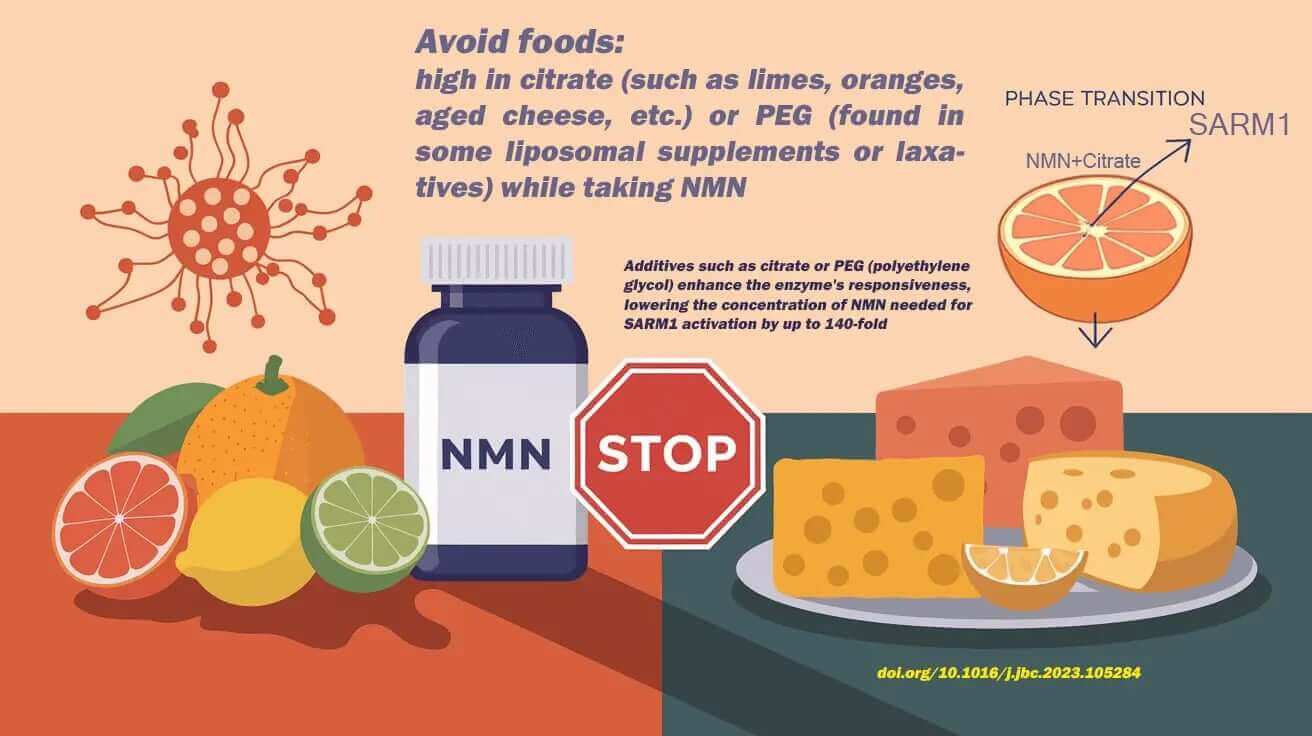
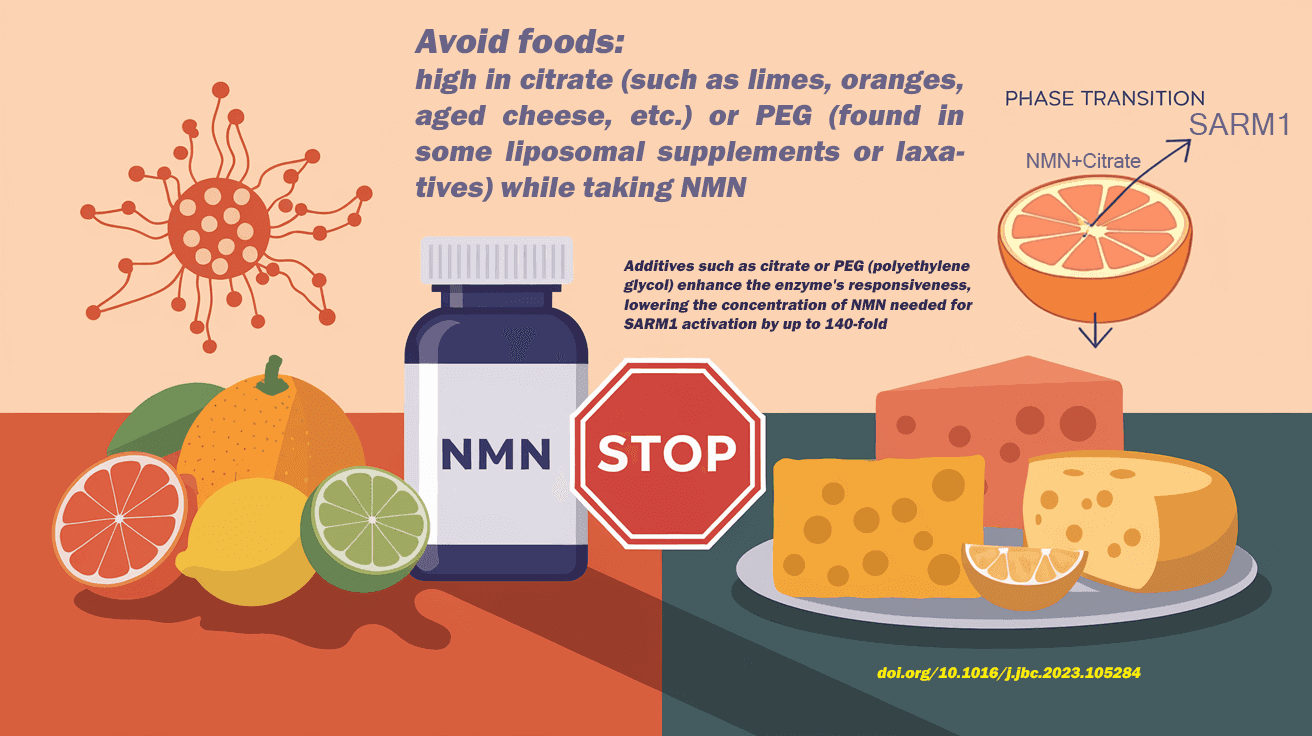
This is the most counterintuitive one. Citrus fruits are healthy by most measures. But research has identified a specific problem when combined with NMN: citrate activates SARM1 (Sterile Alpha and TIR Motif Containing Protein 1), an enzyme that can consume NAD+ very rapidly under certain conditions. Studies show citrate can enhance SARM1 activity by approximately 2000-fold through inducing a phase transition [Bratkowski et al., 2021].
In normal circumstances, SARM1 plays a protective role in neurons. But if you trigger it unnecessarily, especially when you're actively trying to build NAD+ with NMN, you're fighting yourself. Practical tip: take NMN at least 2 hours before or after citrus-heavy meals. Orange juice with your NMN is a suboptimal idea.
🍺 Alcohol: A Direct NAD+ Drain
The liver metabolizes alcohol using, you guessed it, NAD+. Each molecule of ethanol converted requires NAD+ as a cofactor. A couple of drinks can significantly draw down your NAD+ reserves, directly competing with what your NMN supplement is trying to build. Regular alcohol consumption may blunt many of NMN's benefits. If you drink, do it on a night off from NMN, or at minimum separate the timing as much as possible.
🍩 High-Sugar Foods and Refined Carbs
Excess sugar drives glycation, oxidative stress, and inflammation, all of which consume NAD+ through PARP activation and increased CD38 activity. Every time you spike your blood sugar dramatically, you're burning through NAD+ to manage the metabolic fallout. This doesn't mean you can never eat a bagel. It means loading up on refined carbs while taking NMN is working against the investment.
Common culprits to moderate when optimizing NMN:
- Sweetened beverages and fruit juices
- Candy, pastries, and ultra-processed desserts
- White bread consumed in large quantities at NMN-timing meals
- Cereals with added sugar
🥓 Trans Fats and Ultra-Processed Foods
Trans fats (partially hydrogenated oils, still lurking in some packaged foods) promote chronic inflammation and oxidative stress. Chronic inflammation upregulates CD38, which eats NAD+ for breakfast. Literally. Minimize ultra-processed foods if you're serious about NMN working for you.
Best Foods to Pair With NMN Supplements
Food synergy isn't just a buzzword. Certain compounds can actually team up with NMN, boosting its effects or safeguarding the NAD+ it helps generate.
🫐 Antioxidant-Rich Foods
Oxidative stress is like a pesky thief, depleting NAD+ by triggering repair pathways. By reducing oxidative stress, NMN can focus more on building NAD+ instead of constantly playing catch-up with damage. So, let's load up on:
- Blueberries and blackberries: these berries are packed with anthocyanins that neutralize those pesky free radicals
- Dark leafy greens (spinach, kale): folate and B-vitamins here are like little helpers for NAD+ metabolism
- Green tea: EGCG in green tea gives sirtuin activation a nice boost, working in harmony with NAD+
- Cruciferous vegetables: sulforaphane from broccoli and cauliflower helps with cellular detoxification
🥑 Healthy Fats for Absorption
NMN is water-soluble, meaning it doesn't demand fat for absorption. But many folks have reported that taking NMN alongside a small amount of healthy fat improves the overall experience and might even slow gastric emptying, allowing for more gradual absorption. Some tasty options include:
- Avocado: rich in monounsaturated fats, potassium, and it even contains small amounts of NMN itself
- Wild-caught salmon: loaded with omega-3s that help reduce inflammation, preserving NAD+
- Extra virgin olive oil: contains oleocanthal, known for its anti-inflammatory properties
- Nuts and seeds: these provide vitamin E and magnesium, both supporting energy metabolism
🥚 Lean Proteins
Getting enough protein is important, as it provides the amino acids your cells need to harness the increased cellular activity that NMN facilitates. Eggs (they're rich in choline), organic poultry, legumes, and Greek yogurt (great for gut health) all make excellent companions to an NMN routine.
Natural NMN Food Sources: What's Really in Your Veggies?
Sure, NMN is present in foods. But you can't munch your way to those therapeutic NMN levels. Let's look at the numbers from the groundbreaking 2016 Cell Metabolism study [Mills et al., 2016] alongside a 2025 Food & Function update:
| Food Source | NMN Content (mg/100g) | Amount Needed for 500mg NMN | Bonus Nutrients |
|---|---|---|---|
| Edamame (immature soybeans) | 0.47-1.88 | 27-106 lbs | 17g protein/cup, fiber, isoflavones |
| Broccoli | 0.25-1.12 | 45-200 lbs | Vitamin C, sulforaphane, vitamin K |
| Avocado | 0.36-1.60 | 31-139 lbs | Healthy fats, potassium, folate |
| Cucumber | 0.56-0.65 | 77-89 lbs | Hydration, silica, vitamin K |
| Cabbage | 0.0-0.90 | 56+ lbs | Vitamin K, fiber, glucosinolates |
| Green beans | Up to 13mg/100g* | ~4 lbs | Fiber, vitamin C, folate |
*The 2025 Tandfonline study found green beans and broccoli are better NMN sources than we thought, with some samples hitting up to 13mg/100g fresh weight.
Here's the scoop: Eat these foods because they're packed with goodness, not as your go-to NMN source. Consider them a delightful extra. Your supplement? That's the workhorse here. Even with the most optimistic food data, you'd be eating pounds of veggies each day to get close to a 250mg supplemental dose.
NMN Dosage Guide: How Much Should You Take?
RevGenetics has provided NMN since 2016.
One of the original NMN suppliers, wheat-free, no fillers, lab-verified purity. See why thousands choose RevGenetics.
View NMN Products →The most common question we get after "does NMN work?" is "how much NMN should I take?" The answer: it depends on your age, goals, and current health status. But we can give you solid, research-backed starting points.
Evidence-Based Dosage Ranges
| Age Group / Context | Suggested Daily Dose | Notes |
|---|---|---|
| Ages 30-50, general wellness | 250-500mg | Good starting range; assess response over 4-6 weeks |
| Ages 50-70 | 500-750mg | Accelerated NAD+ decline makes higher doses rational |
| Ages 70+ | 750-1000mg | Significant baseline depletion; higher doses studied safely |
| Athletes / high-performance | 500-1200mg | 2021 Chinese study showed dose-dependent aerobic improvements at 1200mg [Liao et al., 2021] |
| Metabolic support (prediabetes) | 250-1000mg | Wash U study used 250mg [Yoshino et al., 2021]; 600mg showed best walking speed in 2024 trial |
Timing: When to Take NMN
Morning is best for most people. NAD+ production aligns with circadian rhythms: it's needed most during active, daylight hours. Taking NMN with or shortly before breakfast supports daytime energy production. An added benefit: some users find NMN gives a mild energy boost, so evening doses occasionally affect sleep. If you're splitting doses (e.g., 500mg morning + 500mg midday), stop the second dose by early afternoon.
Starting Protocol
- Week 1-2: Start at 250mg/day to assess tolerance
- Week 3-4: Increase to your target dose if tolerating well
- Month 2-3: Evaluate: energy, sleep quality, exercise recovery, mental clarity
- Ongoing: Adjust based on your response; consider intracellular NAD+ testing for objective data
Note on mega-dosing: More is not always better. Research suggests a saturation point where additional NMN provides diminishing returns. The sweet spot for most adults appears to be 500-1000mg/day. Taking 3,000mg daily won't triple your results, so save your money.
Proven & Emerging Health Benefits of NMN Supplements
Let's cut to the chase about evidence standards: we're going to separate (a) outcomes from robust human trials, (b) animal studies that look promising but aren't yet proven in humans, and (c) anecdotal/emerging areas. Remember, this is a supplement, not a drug, so we use "supports" language for a reason.
✅ Human Evidence: What We Know
Cellular Energy and Fatigue
The most consistently reported benefit, both in clinical studies and from users, is a boost in energy levels, especially less afternoon fatigue. Here's why: more NAD+ means better mitochondrial function, resulting in more efficient ATP production. In 2022, a Japanese study found that NMN "safely and effectively boosted NAD+ biosynthesis," leading to improved subjective energy and less fatigue in healthy middle-aged Japanese men [Kim et al., 2022].
Metabolic Health and Insulin Sensitivity
A major study from Washington University School of Medicine, published in Science in 2021, is one of the go-to human NMN studies. Overweight and obese postmenopausal women with prediabetes took 250mg of NMN daily for 10 weeks. The result? Significant improvement in muscle insulin sensitivity and an increase in gene expression related to muscle remodeling, all without changes in diet or exercise [Yoshino et al., 2021]. That's a big deal for the 96 million Americans with prediabetes.
Physical Performance
In a Chinese randomized controlled trial involving healthy adults aged 27-50, NMN supplementation combined with exercise showed dose-dependent improvements in aerobic function. The 1200mg/day group had the biggest gains in peak oxygen uptake and ventilatory threshold [Liao et al., 2021]. For athletes, this is exciting stuff.
Walking Speed and Physical Function in Older Adults
A 2024 study revealed that 250mg/day of NMN over 12 weeks improved walking speed and self-reported sleep quality in older adults [Morifuji et al., 2024]. It might not sound flashy, but walking speed is actually a top predictor of healthy aging and longevity in geriatric medicine.
NAD+ Blood Levels
Numerous trials confirm that oral NMN reliably increases blood NAD+ levels. A 2022 dose-escalation study, published in GeroScience, found the highest blood NAD+ in the 600-900mg groups, with no safety issues at any tested dose up to 1250mg [Yi et al., 2022]. A 2024 meta-analysis confirmed this finding across 12 studies with 513 participants [Luo et al., 2024].
🔬 Emerging / Animal Evidence: Where Research Is Heading
Kidney Health Support
Leading research from Tokushima University in Japan showed that NMN (500mg/kg/day in mice) significantly reduced kidney damage markers in models of focal segmental glomerulosclerosis, a condition mimicking age-related kidney decline. The mechanism? It preserves podocytes (kidney filtering cells) and activates SIRT1, a protective enzyme [Hasegawa et al., 2022]. Human trials in this area are ongoing.
Eye Health: Dry Eye Disease and AMD
A 2024 study in Cell Reports (Terao et al.) discovered NMN reduced drusen deposits by more than half in an age-related macular degeneration (AMD) mouse model by reversing macrophage senescence in the retina. Meanwhile, Chinese researchers published findings in the Journal of Inflammation Research indicating NMN protects corneal cells from the hyperosmotic stress typical of dry eye disease by activating SIRT1 and shifting macrophages from destructive M1 to healing M2 states. These are animal/cell studies; human eye trial data is limited but encouraging.
Female Reproductive Health
Two mouse studies found NMN supplementation reversed age-related egg quality decline, improving both quantity and chromosomal integrity [Miao et al., 2020]. Interestingly, moderate doses (~200mg/kg) outperformed high doses (1000mg/kg), suggesting more isn't always better. A separate human study on postmenopausal women found NMN improved hormone levels and metabolic markers. Interesting signal; more human fertility data needed.
Skin Health and Photoaging Prevention
NMN shows potential for protecting skin from UV-induced damage by blocking oxidative stress pathways in dermal cells, increasing collagen synthesis, and maintaining skin thickness. Early research from Japan found that combining NMN with beneficial bacteria enhanced antioxidant activity and reduced skin inflammation. Human skin trials are early but mechanistically promising.
Liver Protection
Animal studies demonstrate NMN supplementation protects liver cells from alcohol-induced damage by boosting hepatic NAD+ levels and maintaining cellular repair capacity. For adults who enjoy moderate alcohol regularly, this is an area to keep an eye on. Human data limited.
Cognitive Function and Neuroprotection
NMN supports neurovascular coupling, the process where brain cells signal blood vessels to increase blood flow. A 2017 study found NMN restored 58% of gene expression patterns in aged mice to those of young animals, including many genes involved in brain function. Human cognitive trials are ongoing. Early reports of improved mental clarity and focus are common, though controlled data is still accumulating.
2023-2025 Clinical Research Highlights
The world of NMN research is buzzing with activity. By early 2025, there have been more than 100 published studies on both humans and animals, all examining the effects of NMN. Let me share the most significant recent findings:
- January 2024, Morifuji et al. (Japan): A 12-week study involving older adults showed NMN supplementation maintained walking speed and improved sleep quality. The research was featured in GeroScience [PubMed].
- 2022, Dose-escalation trial (multicenter, double-blind): Groups taking 300mg, 600mg, and 900mg/day were examined. NAD+ levels topped out between 600 and 900mg. Physical performance, measured by a 6-minute walk test, and quality-of-life scores improved notably in these higher-dose groups. No safety concerns emerged at any dose [Yi et al., 2022].
- 2024, Terao et al. (Cell Reports): NMN was shown to reverse aging in macrophages in an AMD mouse model, cutting harmful eye deposits (drusen) by over 50%. This suggests potential benefits for eye health.
- 2024, Frontiers in Pharmacology review: This thorough review highlighted NMN's broad benefits across metabolic, neurological, cardiovascular, and reproductive systems. It emphasized the need for personalized dosing to match individual NAD+ levels.
- 2024 biorXiv, Lifespan study: Long-term use of NMN extended both the lifespan and healthspan of mice, with more pronounced effects in females. It's a reminder of the value of including both sexes in longevity studies.
- 2024, NMN vs. NR vs. NAM meta-analysis: A systematic review of 12 RCTs with 513 participants found NMN significantly elevated blood NAD+ levels [Luo et al., 2024].
Market context: Back in 2024, the global NMN supplement market was worth $339 million and is expected to exceed $800 million by 2033, growing at about 10% annually. Japan and South Korea experienced a 51% increase in NMN consumption in 2024. High-profile advocates like Dr. David Sinclair (from Harvard) and Dr. Andrew Huberman have played a big role in raising public awareness.
Safety Profile and Side Effects
Ready to support your cellular energy and longevity?
RevGenetics Advanced NMN delivers the NAD+ precursor your cells need, pure, potent, and independently verified.
Explore NMN Supplements →NMN has one of the best safety profiles among longevity supplements. Let's look at the evidence:
What Human Trials Show
- No significant adverse effects in trials up to 1250mg a day [Fukamizu et al., 2022]
- Healthy adults from 27 to over 80 have tolerated it well in studies
- No alarming changes in blood work: liver, kidneys, and blood cells are all good at the doses tested
- A 2022 Scientific Reports study confirmed NMN didn't cause any unusual spikes in hematological and clinical biochemical tests
Reported Mild Side Effects (Uncommon)
- Mild digestive discomfort: often clears up when you take it with food, especially at higher doses or when you're just starting
- Sleep disruption: if you take it too close to bedtime. Easy fix: take NMN in the morning.
- Mild flushing: happens now and then, but much less than with niacin.
- Increased energy: while not exactly a side effect, if you're super sensitive to stimulants, the initial energy jolt can feel pretty intense. Don't worry, it levels out in a few days.
Who Should Consult a Doctor First
- Pregnant or nursing women: there's just not enough safety data for this group
- Individuals with cancer: NAD+ might theoretically support tumor cell metabolism. It's a discussion worth having with your oncologist.
- Anyone on diabetes meds: NMN can improve insulin sensitivity, so your meds might need tweaking
- Individuals on blood thinners or blood pressure meds
- Children and adolescents: young folks usually have plenty of NAD+ as it is
No drug interactions have been officially confirmed yet, but as with any supplement, it's a good idea to mention it to your doctor.
NMN + Resveratrol: The Longevity Stack
Picture this: NMN acts like the fuel for sirtuins by providing NAD+, and resveratrol is the pedal to the metal, activating those sirtuins directly. You can see why this combo caught on, right? Dr. David Sinclair's been a fan, including both in his personal regimen since at least 2019.
Resveratrol's a polyphenol found in red grape skins, red wine, Japanese knotweed, and some berries. It gets SIRT1, the most researched sirtuin for longevity, all fired up. Here's the idea: NMN boosts NAD+ levels to give sirtuins the juice they need, and resveratrol flips the switch to get them cranking. Together, they might just pack a bigger punch than either on its own.
Choosing Quality Resveratrol
Heads up: not all resveratrol supplements are created equal. Some are about as effective as a chocolate teapot, causing nausea or digestive woes. Keep an eye out for:
- Trans-resveratrol, which is the active form, unlike its less effective cousin, the cis form
- Formulations with enhanced bioavailability (some use phospholipid complexes to help)
- Verification of purity by third-party testing
Dosing note: Resveratrol studies cover a broad range. Many folks stick to 250-500mg/day. Start low, then adjust as you go.
Other Synergistic Supplements to Consider
- TMG (trimethylglycine / betaine): NMN munches on methyl groups during metabolism. TMG helps top those up, avoiding depletion. Many longevity fans tag 500-1000mg of TMG with their NMN.
- Quercetin: It's like a cleanup crew for senescent 'zombie' cells and fights inflammation. It complements NMN through other pathways.
- Vitamin D3 + K2: Essential for cellular health, immunity, and heart wellness.
- Magnesium glycinate: A key player in ATP synthesis, and a lot of adults are running low on it.
- Omega-3 fatty acids (EPA/DHA): They help reduce inflammation and the CD38-driven NAD+ drain that comes with it.
How to Choose a Quality NMN Supplement: Don't Get Burned
Here's a little secret the NMN industry isn't shouting from the rooftops: a significant number of NMN supplements tested by independent researchers contain way less NMN than they claim, or sometimes, none at all. I'm not exaggerating. Consumer Lab and independent testing have caught products boasting 500mg/capsule that deliver under 50mg.
When picking an NMN supplement, insist on:
- ISO 17025 accredited third-party Certificate of Analysis (CoA): don't settle for "third-party tested" just as a catchy tagline. The CoA should name the laboratory doing the testing, and you should be able to independently verify the lab's accreditation.
- GMP (Good Manufacturing Practice) certified facility: ideally FDA-registered cGMP. This ensures the manufacturing process meets pharmaceutical-grade standards.
- 99%+ purity NMN: the CoA should specify the purity of NMN, not just say "passes identity testing."
- Clean label: pure NMN in a vegetarian capsule. Avoid proprietary blends that obscure the actual NMN content. Steer clear of unnecessary fillers, flow agents, or artificial additives.
- Lot/batch traceability: you should be able to match your bottle's lot number to a specific CoA.
- Stable packaging: NMN doesn't play well with heat, light, and moisture. Look for dark or opaque bottles, proper storage instructions, and moisture-barrier packaging.
Red flags: Extremely low prices (real high-purity NMN has a cost), "proprietary blend" labels, no verifiable CoA, fuzzy claims about the testing lab, or websites making disease treatment claims (remember, NMN is a dietary supplement, not a drug).
Why RevGenetics Since 2016
Want to boost your NAD+ levels?
RevGenetics NMN supplements are pharmaceutical-grade, third-party tested, and formulated for maximum absorption.
Shop NMN Supplements →RevGenetics didn't jump on the NMN bandwagon after it became a hot topic on social media. We were in the field back in 2016, supplying NMN to university research labs when most folks thought "NMN" was just a typo.
There are a few reasons why that's important:
- We have the track record. Our original 2016 ISO 17025 Certificate of Analysis is out there for everyone to see. We've been crafting and testing pharmaceutical-grade NMN for almost ten years.
- We test what we sell. Each batch gets checked by an accredited ISO 17025 lab. We share the results. Customers can even reach out to the testing lab themselves for verification.
- We use our own products. Anthony Loera, the founder of RevGenetics, has shared his personal journey of doubling his age-optimal NAD+ levels using our NMN. We offer intracellular NAD+ testing kits so you can see for yourself.
- We've exposed fraudulent competitors. We've analyzed competitor products and released findings when they didn't match their labels. We'd rather see customers spend their money wisely than on ineffective products.
- Clean labels, no games. Our capsules only include NMN and a vegetarian capsule shell. That's all. No magnesium stearate, no silicon dioxide, no hidden ingredients.

If you're serious about NMN supplementation, check out RevGenetics Advanced NMN products. The same quality trusted by researchers. Now available for you.
Putting It All Together: Your NMN Action Plan
You've gone through the science. Now, let's break it down into practical steps:
- Choose a verified, high-purity NMN supplement with an ISO 17025 CoA and GMP manufacturing. This isn't the place to cut corners.
- Start at 250-500mg/day, taken in the morning with or shortly before breakfast. Add some healthy fat if you like: think avocado toast with your NMN, a delicious combo.
- Time citrus, alcohol, and high-sugar foods away from your NMN dose: at least 2 hours apart. Not a catastrophe if you don't, but every bit counts for optimization.
- Stack with resveratrol and TMG if you're aiming for a full-scale longevity strategy. Throw in vitamin D3/K2 and omega-3s for wider cellular support.
- Combine with exercise, quality sleep, and stress management. NMN isn't a replacement for healthy habits, it enhances them.
- Give it time. You might notice energy boosts in 2-4 weeks, while metabolic and cellular perks build over months. NAD+ optimization is a marathon, not a sprint.
- Track your progress. Keep a journal. Think about intracellular NAD+ testing at the start and after 3 months for solid data.
Frequently Asked Questions About NMN Supplements
1. What exactly is NMN and how does it work?
NMN, or nicotinamide mononucleotide, is a molecule your body naturally uses as a direct precursor to NAD+. When you take an NMN supplement, it enters cells through the Slc12a8 transporter, discovered in 2019, and is quickly converted to NAD+ by the enzyme NMNAT. This process usually happens within 15 to 30 minutes. NAD+ then powers mitochondrial energy production, aids in DNA repair via PARP enzymes, and activates sirtuins, all pathways for cellular health and longevity.
2. Can I get enough NMN from food alone?
Technically, yes: foods like edamame, broccoli, avocado, and green beans have NMN. Practically, not really: you'd have to munch on several pounds of these foods daily to hit a 250mg supplemental dose. The most NMN-rich foods, like green beans and broccoli, pack at best 13mg per 100g. Enjoy these for their nutrition, not as your NMN source.
3. How long does NMN take to start working?
Blood NAD+ levels start climbing within hours of your first dose. Most people feel more energetic and mentally sharp within 2 to 4 weeks of consistent daily use. Bigger benefits, like improved exercise recovery, enhanced metabolic health, and better sleep quality, often take 6 to 12 weeks to show up. The cellular and genetic perks in research need months of steady supplementation. Patience is key here.
4. What's the best time of day to take NMN?
Morning is generally recommended, ideally with or just before breakfast. This syncs with your body's circadian rhythms, when NAD+ is needed for daytime energy production. Steer clear of late-day doses, as the energy boost might mess with sleep for some folks. If you're splitting doses, say 500mg in the morning and 250 to 500mg midday, take the second dose no later than early afternoon.
5. Should I take NMN with or without food?
Either way works. NMN is water-soluble and absorbed through a dedicated cellular transporter, so it doesn't rely on dietary fat for absorption. Many folks prefer taking it with a light breakfast, like eggs, avocado, or nuts, for comfort and to benefit from healthy fats. Avoid pairing NMN with citrus-heavy meals or within 2 hours of drinking alcohol.
6. How much NMN should I take?
Research-backed ranges: 250 to 500mg/day for adults aged 30 to 60 aiming for general wellness; 500 to 750mg for those 50 to 70; 750 to 1000mg for folks over 70 or with specific health targets. The 2022 multicenter trial found the 600 to 900mg range delivered the highest blood NAD+ levels with the best quality-of-life boosts. Start low in your range and gradually increase over 2 to 4 weeks as you tolerate it.
7. Is NMN safe? Any side effects?
NMN's safety profile is excellent. Multiple human trials have shown no significant adverse effects at doses up to 1250mg/day [Fukamizu et al., 2022]. The most common minor side effects are mild digestive discomfort, usually when starting or at high doses, so consider taking it with food to minimize this. Some people experience occasional sleep disruption if they take it late in the day. Unlike high-dose niacin, NMN isn't known for causing flushing. If you're pregnant, nursing, or on medications for diabetes, blood pressure, or cancer, consult your doctor.
8. What's the difference between NMN and NR (nicotinamide riboside)?
Both are NAD+ precursors in the salvage pathway. Key differences: NMN is a step closer to NAD+ in the biosynthetic pathway than NR. NMN has its own dedicated cellular transporter, Slc12a8 [Grozio et al., 2019]. Recent head-to-head human trials found both NMN and NR significantly elevated circulating NAD+ after 14 days, while niacinamide showed no significant effect. Current evidence doesn't conclusively favor one over the other for most people, though NMN's direct transport mechanism might give it a bioavailability edge.
9. Can NMN be combined with resveratrol?
Yes, and it's a popular combo for good reason. NMN boosts NAD+ (fuel for sirtuins), while resveratrol directly activates sirtuins, especially SIRT1. Together, they synergize on longevity pathways. Dr. David Sinclair has used both in his regimen for years. If you're combining, start each supplement separately to see how your body responds before stacking. Common doses: NMN 500mg plus resveratrol 250 to 500mg, both in the morning.
10. What other supplements pair well with NMN?
Top complements: TMG/betaine (250 to 1000mg) to support methylation and prevent methyl group depletion; quercetin for senolytic effects; vitamin D3 plus K2 for foundational cellular health; magnesium glycinate for ATP synthesis support; omega-3 fatty acids (EPA/DHA) to reduce inflammation and the NAD+-draining effect of chronic CD38 activation. Avoid high-dose niacin alongside NMN, as it's redundant at best and potentially counterproductive at worst.
11. Does NMN help with weight loss?
NMN supports metabolic health, making weight management easier, but it's no magic weight-loss pill. A 2016 mouse study showed NMN supplementation prevented age-related weight gain, reduced body fat, and increased energy metabolism [Mills et al., 2016]. The 2021 Washington University human trial showed improved muscle insulin sensitivity in overweight postmenopausal women. Better insulin sensitivity generally aids healthier weight regulation. When paired with a sensible diet and exercise, NMN provides cellular support for a healthier metabolism.
12. Can NMN improve athletic performance?
Yes, especially in older adults and at higher doses. A Chinese RCT on adults aged 27 to 50 found dose-dependent aerobic improvements, with the 1200mg/day group showing the greatest gains in peak VO2 and ventilatory threshold when combined with exercise [Liao et al., 2021]. For trained athletes aiming to boost performance, 600 to 1200mg/day combined with a consistent training program is the best-studied approach.
13. Does NMN benefit the kidneys?
Animal research from Tokushima University in Japan found NMN (500mg/kg/day) significantly reduced markers of kidney damage in a glomerulosclerosis model, a condition resembling age-related kidney decline. The mechanism involves preserving podocytes (filtering cells) and activating SIRT1 in kidney tissue [Hasegawa et al., 2022]. This is promising preclinical data. Human kidney trials are ongoing, so NMN is not a proven kidney disease treatment, but the early research is compelling for kidney health support.
14. Can NMN help with eye health?
Two distinct areas: (1) Dry eye disease, Chinese lab research found NMN protects corneal cells from hyperosmotic stress and shifts immune macrophages from inflammatory M1 to healing M2 states via SIRT1 activation. (2) Age-related macular degeneration, a 2024 Cell Reports study found NMN reduced destructive drusen deposits by over 50% in an AMD mouse model by reversing macrophage senescence (Terao et al.). Both are animal/cell studies at this stage; human eye trials are early but mechanistically encouraging.
15. Is NMN beneficial for women during menopause?
Yes, with growing evidence. The Washington University prediabetes trial showed meaningful metabolic benefits in postmenopausal women specifically [Yoshino et al., 2021]. Separate Japanese research found NMN improved hormone levels and skin in postmenopausal women. Mouse studies on fertility showed NMN restored chromosomal integrity in eggs at optimal doses (~200mg/kg), offering theoretical (not confirmed human) hope for age-related fertility challenges. The metabolic and energy benefits are the strongest documented human applications for this demographic.
16. Should younger people (under 40) take NMN?
They can, but the benefit calculus is different. Young adults with high NAD+ levels naturally may notice subtler effects. That said, certain situations argue for earlier supplementation: athletes under intense training stress, individuals with chronic fatigue or high psychological stress loads, those in highly inflammatory occupations, and people who want to establish the habit early as preventive longevity care. For general wellness under 35, lifestyle optimization (exercise, sleep, diet) may offer more return on investment than NMN supplementation.
17. Can NMN reverse aging?
The honest answer: NMN can reverse certain age-related cellular changes, but it doesn't stop the calendar. Harvard studies showed NMN reversed biochemical aging markers in mice, with vascular function in old mice improving to match young mice. In humans, NMN restores NAD+ levels to more youthful ranges and improves biomarkers of metabolic health, physical function, and cellular vitality. Whether this translates to extended lifespan in humans is still being studied. The goal most researchers focus on is "healthspan," more healthy, vibrant years, rather than raw chronological lifespan.
18. Why does citrus interfere with NMN?
Citrate, from citrus, activates SARM1 (Sterile Alpha and TIR Motif Containing Protein 1), an enzyme that can consume NAD+ in neurons and cells. Research shows citrate can enhance SARM1 activity by approximately 2000-fold through a phase transition mechanism [Bratkowski et al., 2021]. When you're actively supplementing with NMN to build NAD+, having SARM1 triggered simultaneously is counterproductive. The practical solution is simple: separate NMN from citrus-heavy foods by at least 2 hours. You don't need to give up orange juice, just don't take your NMN with it.
19. How do I know if my NMN supplement is actually working?
Subjectively: track energy levels, sleep quality, exercise recovery, and mental focus daily for 4 to 12 weeks. Most people notice changes in these areas first. Objectively: intracellular NAD+ testing (RevGenetics offers testing kits) gives you actual data. Blood work improvements in fasting glucose, HbA1c, or inflammatory markers over 3 to 6 months provide additional evidence. Some long-term users track biological age through services like Elysium's Index or TruAge.
20. How should NMN supplements be stored?
NMN is sensitive to heat, light, and moisture. Store in a cool, dry place. A cabinet away from the stove or dishwasher is ideal. Refrigeration isn't required for most products but can extend shelf life, especially in humid climates. Keep in the original dark or opaque container. Don't store in bathrooms (humidity fluctuates too much). Check expiration dates and use within the recommended timeframe. Quality manufacturers use moisture-barrier packaging for a reason.
21. What should I look for on an NMN Certificate of Analysis?
Look for: (1) ISO 17025 accreditation of the testing laboratory, verify the lab's accreditation number independently; (2) purity ≥99% for NMN specifically; (3) identity confirmation (HPLC or NMR confirmation that the substance is actually NMN); (4) heavy metals testing (lead, arsenic, cadmium, mercury); (5) microbial testing; (6) lot/batch number matching your product. Contact the laboratory directly with the lot number to verify the document is authentic. Some companies use fake or borrowed CoAs, this verification step catches them.
22. What happens if I stop taking NMN?
NAD+ levels gradually return to baseline over several weeks after stopping. The improvements accumulated during supplementation, better mitochondrial function, improved metabolic markers, slowly diminish. No withdrawal symptoms or harmful effects from discontinuation. Some users cycle NMN (e.g., 5 days on, 2 days off) without apparent loss of benefit, though daily supplementation is the most studied approach. If you stop and notice a significant decline in energy or cognition, that itself is useful feedback about NMN's effect on your particular biology.
23. Can NMN help with cognitive decline and brain fog?
Brain fog is one of the most commonly reported issues NMN helps with, and there's a plausible mechanism: NAD+ supports neurovascular coupling, the process by which neurons signal blood vessels to deliver more oxygen and glucose on demand, which is impaired with age. A 2017 study found NMN restored blood flow coupling in aged mice. Human cognitive trials are ongoing; current human evidence is largely self-reported but remarkably consistent. For those experiencing age-related cognitive slowdown, NMN's effects on brain energy metabolism make it one of the more mechanistically justified supplements to try.
24. How does RevGenetics NMN compare to other brands?
RevGenetics has been supplying NMN since 2016, before most brands existed. Every batch is tested by an ISO 17025 accredited laboratory with publicly verifiable certificates. The capsules contain only pharmaceutical-grade NMN and a vegetarian capsule shell, no fillers, no mystery additives. RevGenetics has independently tested competitor products and published findings when they failed label claims. The founder personally uses the product and has documented his NAD+ levels. In a market flooded with brands of dubious quality, the 9-year track record and transparent testing documentation set RevGenetics apart clearly.
25. Are there any interactions between NMN and common medications?
No drug interactions have been formally confirmed in clinical studies to date. However, because NMN improves insulin sensitivity, individuals on diabetes medications (metformin, insulin, sulfonylureas) should monitor blood glucose more carefully when starting NMN. Similarly, blood pressure medications may need monitoring as NMN improves cardiovascular function. Anticoagulant users should discuss with their physician. NMN itself is not metabolized through the CYP450 system, so pharmaceutical interactions via that route are unlikely, but disclosure to your prescribing physician is always the right call.
NMN Delivery Forms: Capsules vs. Sublingual vs. Liposomal
RevGenetics has provided NMN since 2016.
One of the original NMN suppliers, wheat-free, no fillers, lab-verified purity. See why thousands choose RevGenetics.
View NMN Products →Picture yourself in the NMN supplement aisle (or browsing Amazon) and you'll see capsules, powders, sublingual tablets, and liposomal formulations, all shouting about their top-notch absorption. But what's the real scoop according to science?
Standard Capsules and Powders
This is the form that's been used in nearly every human clinical trial so far. When researchers boast about NMN's safety and effectiveness at 250-1000mg/day, they're talking about capsules or powders. Thanks to the Slc12a8 transporter discovery in 2019, NMN has its own special uptake mechanism from the gut into circulation. This discovery calms a lot of the worries about oral bioavailability that bugged older NAD+ precursors. Standard capsules are well-absorbed, budget-friendly, and backed by the most clinical evidence.
Sublingual NMN
Sublingual administration, where you let powder dissolve under your tongue, skips the first-pass liver metabolism and sends NMN straight into the blood vessels under your tongue. In theory, this boosts bioavailability, especially for smaller doses. In practice, the capacity of those sublingual blood vessels is limited; beyond about 30mg, extra NMN just gets swallowed. Some folks like sublingual for its quicker onset of perceived effects. No head-to-head human trials comparing sublingual vs. capsule NMN are out there yet, so "superior absorption" claims are more speculative than proven.
Liposomal NMN
Liposomal encapsulation uses lipid nanoparticles to shield NMN from digestive breakdown and boost cellular uptake. Chatting in Reddit longevity groups, people estimate 90% absorption with liposomal compared to 10-30% with sublingual at higher doses. But remember, these figures aren't from published human trials. Liposomal NMN costs more to produce, and as of 2025, no peer-reviewed RCT has compared results between liposomal and standard NMN in humans. It's an interesting but unproven enhancement.
The Bottom Line on Forms
For most folks, high-quality capsules are the sensible choice: they come with clinical evidence, offer the best price-to-efficacy ratio, and provide the most transparent quality control. If you're keen to try sublingual for its convenience or liposomal for its theoretical absorption perks, go ahead. They're not harmful, just know you're stepping into uncharted scientific territory. What matters beyond delivery form is the purity and verified dose of what you're taking.
Lifestyle + NMN: How to 2x Your Results
NMN boosts healthy habits. Healthy habits boost NMN. This isn't just marketing fluff: it's pure biology. Let's explore how to create a lifestyle stack that maximizes your NMN investment.
Exercise: The Ultimate NAD+ Synergist
Exercise is a powerhouse for boosting NAD+ biosynthesis, mainly by upregulating NAMPT, a key enzyme in the NAD+ salvage pathway. So, here's what happens when you mix regular exercise with NMN supplements:
- Exercise ups the demand for NAD+; NMN makes sure there's plenty to go around
- NMN aids quicker recovery after workouts by maintaining DNA repair capacity in exercised muscles
- Together, they enhance mitochondrial biogenesis, or the creation of new mitochondria, more effectively than either one on its own
The Chinese RCT we talked about earlier confirmed this: NMN plus exercise led to dose-dependent improvements in VO2 peak and aerobic threshold, which neither could achieve alone at the studied doses [Liao et al., 2021]. If you're into NMN and skipping exercise, you're missing out on big benefits.
Time-Restricted Eating / Intermittent Fasting
A 2025 MDPI study showed that adding NMN to time-restricted feeding (all meals within a daily window) improved body composition, physical performance, muscle mitochondrial function, and gut microbiome health more than either alone. How? Fasting kicks off SIRT1 and AMPK, an energy-sensing enzyme, and NMN provides the NAD+ that SIRT1 needs to function. It's a match made in metabolic heaven.
Practical protocol: Many NMN fans pair their supplement with a 16:8 intermittent fasting schedule, eating between noon and 8pm, and taking NMN in the morning during the fasting window. This might amplify the effects of both on cellular repair and metabolic health.
Sleep Optimization
NAD+ is tied to circadian rhythm regulation via SIRT1's influence on the CLOCK/BMAL1 complex. When you skimp on sleep, it drains NAD+ and messes with its daily cycle. Better sleep equals a better NAD+ baseline. It's a positive feedback loop: NMN aids circadian regulation, which enhances sleep quality, which supports higher NAD+ production. Aim for 7-9 hours of sleep every night, a consistent bedtime and wake time, a dark and cool bedroom, and reduce blue light exposure two hours before bed.
Stress Management
Chronic stress quietly depletes NAD+. This isn't just a vague "stress is bad" notion, but a real mechanism: stress triggers inflammatory pathways that ramp up CD38, an enzyme that hungrily consumes NAD+. A stressed person with low NAD+ is fighting a tough battle that NMN alone can't solve. Meditation, breathwork, spending time in nature, and regular social connections aren't just nice extras for your NMN routine: they're integral to it.
Hydration
All the cellular processes NAD+ supports, like energy production, DNA repair, and sirtuin activation, need water. Proper hydration, about 8-10 glasses of water daily for most adults, adjusted for body size and exercise, supports NAD+ synthesis and distribution in cells. Always take your NMN with a full glass of water.
NMN for Specific Groups: Tailoring Your Approach
NMN for Adults Over 60
This group stands to gain the most from NMN. By the time you've hit 60, your NAD+ levels could be 40 to 60% lower than when you were a sprightly young adult. The perks? Boosts in energy, metabolic health, and physical function. These are most noticeable when you're starting from a lower baseline. In 2024, a study on walking speed used just 250mg/day in older adults and saw significant improvements [Morifuji et al., 2024]. Higher doses, like 600 to 900mg, showed even greater benefits in physical function trials. If you're over 60 and haven't given NMN a shot, it might just be the most well-supported longevity supplement to consider.
NMN for Women: Unique Considerations
Beyond the menopause perks we chatted about earlier, like metabolic improvement and potential fertility support, women face unique NAD+ challenges at various life stages:
- Perimenopause (40-55): Hormonal fluctuations heighten oxidative stress and NAD+ needs. NMN could help with the energy and metabolic resilience many women find slipping during this phase.
- Postmenopause (55+): The Washington University trial is your go-to reference: 250mg/day significantly improved muscle insulin sensitivity. Higher doses might offer even more benefits.
- Active women / athletes: The aerobic performance data applies equally here. Women in the Chinese RCT saw similar improvements to men at equivalent doses.
- Skin health: Japanese studies suggest NMN might guard against UV-induced photoaging and bolster collagen production, a bonus since many women focus on skin health.
NMN for Athletes and Biohackers
The performance crowd has embraced NMN with open arms, and it's easy to see why. Key uses include:
- Pre-training: Take NMN 60 to 90 minutes before working out to boost NAD+-dependent energy during your exercise
- Recovery: NMN aids DNA repair in muscle tissue post-exercise, which might cut down on recovery time
- Endurance: The aerobic performance data [Liao et al., 2021] is particularly relevant for endurance athletes, with VO2 max improvements at 1200mg/day
- Stacking: Pair it with creatine (muscular energy), beta-alanine (buffering), and omega-3s (anti-inflammatory) for an all-around performance boost
NMN for the Health-Conscious 30-Somethings
Starting NMN in your 30s is like snagging insurance before you actually need it, and that's spot on. By 35, NAD+ decline is already a thing for most folks, and getting into the habit of supplementing early means you're keeping those baseline levels higher as you cruise through the critical decline years in your 40s and 50s. Lower doses (250 to 500mg) suit this age group. It's about maintaining longevity, not scrambling for a fix.
5 NMN Myths (And What the Science Actually Says)
Ready to support your cellular energy and longevity?
RevGenetics Advanced NMN delivers the NAD+ precursor your cells need, pure, potent, and independently verified.
Explore NMN Supplements →When something gets popular, misinformation tends to follow. Let's clear up the fog around some persistent NMN myths floating around the web:
Myth 1: "NMN needs to convert to NR first, it's no better than NR"
Busted. In 2019, scientists discovered the Slc12a8 transporter, revealing NMN has its own way into cells [Grozio et al., 2019]. It doesn't have to become NR first. Now, whether NMN is truly "better" than NR is still up for debate (recent trials showed both nearly doubled NAD+ levels), but the idea that "NMN must convert to NR" is old news.
Myth 2: "More NMN = more NAD+ = better results"
Partially true, mostly misleading. Yes, blood NAD+ does rise with increased doses, but only to a point. Most folks hit a saturation limit around 600-1000mg/day, after which more NMN doesn't add much. In fact, some benefits (like in the fertility mouse study) actually declined with high doses compared to moderate ones. It's about finding the sweet spot, not just cranking up the dosage.
Myth 3: "NMN is only for old people"
Oversimplified. NAD+ levels start dropping in your 30s. Athletes under intense training burn through NAD+ faster. Chronic stress speeds up the decline regardless of age. While older adults, especially those over 50, see the best benefit-to-cost ratio, younger folks with demanding lifestyles can also gain a lot from NMN supplements.
Myth 4: "You can get enough NMN from food"
Completely false at therapeutic levels. As you can see in the table above, you'd have to eat 27-200+ pounds of the top NMN-rich foods every day to match a 500mg supplement dose. Sure, enjoy those foods, they're healthy, but don't mistake them for a reliable NMN supplement.
Myth 5: "All NMN supplements are the same"
Dangerously wrong. Independent tests often find that products contain only a fraction of their claimed NMN. Factors like manufacturing quality, purity checks, and storage conditions all impact potency. The CoA-verification process we've mentioned exists because this issue is widespread. Stick to verified sources.
NMN and Cardiovascular Health
Did you know your heart and blood vessels are NAD+ powerhouses? Yep, they demand a lot. Vascular smooth muscle cells, endothelial cells lining your arteries, and cardiac muscle cells all thrive on high NAD+ levels for energy and repair. As we age, NAD+ takes a nosedive: this leads to stiffening arteries, less efficient blood flow regulation, and a scarier cardiovascular risk profile.
What the Research Shows
In a 2023 randomized, double-blind, placebo-controlled trial published in Scientific Reports (Katayoshi et al.), researchers took a close look at NMN supplementation's effect on arterial stiffness in middle-aged and older folks. Here's the scoop:
- Folks with higher BMI or blood glucose levels experienced notable reductions in brachial-ankle pulse wave velocity (baPWV): a vital measure of arterial stiffness after 12 weeks of NMN supplementation
- The biggest impacts were seen in those with the highest metabolic risk profiles, hinting that NMN might shine brightest for those who need it most
- Blood pressure trends, while not always statistically significant across all subgroups, leaned in favor of NMN over placebo
Animal studies out of Harvard have shown NMN can reverse age-related issues in mouse blood vessels. "Vascular function in old mice improved from 60% to 86%, matching that of young mice." The magic happens through:
- Activating endothelial SIRT1: cuts down oxidative stress in vessel walls
- Boosting nitric oxide signaling: brings back healthy vasodilation
- Slashing vascular inflammation: downregulates inflammatory gene expression in smooth muscle
- Restoring neurovascular coupling: enhances brain blood vessels' response to neuronal demand
Cardiovascular Context for US Adults
Cardiovascular disease still holds the top spot as the leading cause of death in the US, claiming over 695,000 American lives every year. Almost 1 in 3 US adults deals with high blood pressure. Now, NMN isn't a cardiovascular drug and should never be a substitute for prescribed medications. But for those of us looking to supercharge our cardiovascular health alongside good diet, regular exercise, quitting smoking, and proper medical care, NMN's vascular research stands out as one of the more intriguing non-drug strategies being explored.
NMN and Skin Health: The Anti-Aging You Can See
Most NMN benefits happen inside, in mitochondria, DNA repair machinery, and cellular energy production. But one benefit shows up in the mirror: skin health. And in a market flooded with topical retinoids and antioxidant serums, oral NMN could offer systemic skin benefits that topical products just can't reach.
UV Protection from the Inside Out
Ultraviolet radiation, particularly UVB, is the main culprit of photoaging. That's the premature skin aging caused by cumulative sun exposure that leads to fine lines, age spots, and loss of elasticity. UV damage depletes NAD+ in skin cells and triggers PARP-driven DNA repair responses. Research from Japan showed NMN protected both human and mouse skin cells from UVB damage by:
- Blocking oxidative stress in dermal cells
- Supporting the enzymes needed for skin cell regeneration after sun damage
- Reducing harmful inflammation in UV-exposed tissue
Collagen Production and Skin Thickness
Teaming up NMN with beneficial bacteria in research models enhanced antioxidant activity, reduced skin inflammation, and boosted both collagen production and skin thickness. Collagen decline, the structural protein that gives skin its plumpness and elasticity, starts to show in your 30s. Supporting collagen synthesis at the cellular level through NAD+-dependent pathways is a smart upstream approach.
SIRT1's Role in Skin Aging
SIRT1 is highly active in skin tissue and plays a regulatory role in keratinocyte differentiation, wound healing, and protection against oxidative damage. SIRT1 activity depends on NAD+. As you age and NAD+ levels drop, SIRT1 in skin cells slows down. This contributes to slower wound healing, increased UV susceptibility, and loss of structural integrity. NMN supports SIRT1 activity in skin just like it does throughout the body.
Practical Skin Strategy
NMN isn't a replacement for sunscreen (please wear SPF 30+ daily, as no supplement compensates for photodamage). Think of it as a complementary inside-out approach: use evidence-based topical products like retinoids, vitamin C, and SPF, support your skin's cellular machinery with NMN and antioxidant-rich nutrition, and remember that skin health ultimately reflects systemic health. Chronically inflamed, stressed, sleep-deprived people rarely have great skin, no matter what they put on it.
The Future of NMN: What's Coming Next
Want to boost your NAD+ levels?
RevGenetics NMN supplements are pharmaceutical-grade, third-party tested, and formulated for maximum absorption.
Shop NMN Supplements →NMN research is taking off quicker than most scientists would've guessed five years ago. Here's what the next 2 to 5 years might bring for this exciting field:
Personalized NAD+ Optimization
A 2024 medRxiv preprint from European researchers painted a picture of "personalized NMN supplementation," where baseline NAD+ levels (measured via blood or intracellular testing) guide individual dosing instead of relying on population averages. As intracellular NAD+ testing becomes more accessible and affordable, with companies like RevGenetics offering testing kits, personalized NMN protocols could become the standard rather than the exception in the coming years. Your 500mg dose might be someone else's 1000mg, and that's okay!
NMN for Specific Age-Related Conditions
Active clinical trials as of early 2025 are exploring NMN for:
- Mild cognitive impairment and Alzheimer's prevention: NAD+'s role in neuronal energy and the amyloid-clearing autophagy pathway makes this a top research area.
- Type 2 diabetes management: Building on findings from Washington University about insulin sensitivity with larger, longer trials.
- Heart failure and cardiovascular recovery: NAD+'s involvement in cardiac energy metabolism is well-known; clinical application is the next frontier.
- Frailty syndrome in elderly populations: Walking speed and physical function data are pointing in this direction.
- Age-related hearing loss: Cochlear hair cells are highly NAD+-dependent, making this a fascinating new application.
Next-Generation Delivery Systems
Pharmaceutical-grade NMN formulations are in the works, aiming for enhanced bioavailability beyond current liposomal methods. Nanoparticle encapsulation, targeted tissue delivery, and combination products (NMN + cofactors all in one optimized formulation) are all being developed. The 2016 landscape when NMN was mostly a research chemical feels like ancient history now. This field is growing up fast.
Regulatory Evolution
In November 2022, the FDA issued a warning that NMN couldn't be sold as a dietary supplement in the US because a drug company had filed an IND (Investigational New Drug) application for NMN first. This introduced some regulatory murkiness. However, as of early 2025, NMN is still widely available and sold by reputable supplement companies while the regulatory situation unfolds. This could change, so keeping up with developments is wise if you're planning a long-term supplementation strategy.
The Longevity Economy
With the NMN market at $339 million in 2024 and growing at 10% annually, this is no longer a niche hobby just for biohackers. Mainstream wellness brands, pharmaceutical companies, and tech investors are jumping in. Japan and South Korea have led the charge, with a 51% consumption surge in 2024, and US consumers, particularly health-conscious Boomers and Gen X adults, are catching up quickly. The science is maturing, the market is expanding, and competition on product quality will likely drive improvements across the industry over the next five years. Exciting times ahead!
NMN and Cancer: Addressing the Concerns
Let's tackle this head-on, because it's a question that pops up a lot.
The concern: NAD+ is all about powering up cellular energy and fixing DNA, right? Well, it does this for all cells, including those pesky cancerous ones. So, theoretically, boosting NAD+ might fuel tumor growth. Scientists have occasionally mentioned this in their papers.
What the evidence actually shows:
- No human clinical trial has shown that taking NMN supplements ups cancer risk
- At the studied doses (up to 1250mg/day), no signs of causing cancer have been found
- NAD+'s involvement in DNA repair could actually help reduce cancer risk by stopping those DNA goofs that start cancer
- The link between NAD+ and existing cancer is tricky and not fully figured out yet
Our recommendation: If you're dealing with active cancer or undergoing treatment, chat with your oncologist about NMN before diving in. This isn't just a "what if" scenario; it's smart medical teamwork. For healthy folks without cancer, the evidence doesn't suggest steering clear of NMN over cancer worries.
References
- Yoshino J et al. (2018). NAD+ Intermediates: The Biology and Therapeutic Potential of NMN and NR. Cell Metabolism.
- Yoshino M et al. (2021). Nicotinamide Mononucleotide Increases Muscle Insulin Sensitivity in Prediabetic Women. Science.
- Liao B et al. (2021). Nicotinamide Mononucleotide Supplementation Enhances Aerobic Capacity in Amateur Runners. J Int Soc Sports Nutr.
- Yi L et al. (2022). The Efficacy and Safety of NMN Supplementation in Healthy Middle-Aged Adults. GeroScience.
- Grozio A et al. (2019). Slc12a8 is a nicotinamide mononucleotide transporter. Nature Metabolism.
- Fukamizu Y et al. (2022). Safety evaluation of β-NMN oral administration in healthy adult men and women. Scientific Reports.
- Mills KF et al. (2016). Long-Term Administration of NMN Mitigates Age-Associated Physiological Decline in Mice. Cell Metabolism.
- Miao Y et al. (2020). Nicotinamide Mononucleotide Supplementation Reverses Age-Related Decline in Female Reproductive Function. Cell Reports.
- Hasegawa K et al. (2022). NMN ameliorates adriamycin-induced renal damage. Scientific Reports.
- Morifuji M et al. (2024). Ingestion of NMN increased blood NAD levels, maintained walking speed, and improved sleep quality in older adults. GeroScience.
- Luo C et al. (2024). Efficacy of oral NMN supplementation on glucose and lipid metabolism: systematic review with meta-analysis. Critical Reviews in Food Science and Nutrition.
- Bratkowski M et al. (2021). A phase transition enhances the catalytic activity of SARM1, an NAD+ glycohydrolase involved in neurodegeneration. eLife.
- Katayoshi T et al. (2023). Nicotinamide adenine dinucleotide metabolism and arterial stiffness after long-term NMN supplementation. Scientific Reports.
These statements haven't been evaluated by the Food and Drug Administration. NMN supplements aren't meant to diagnose, treat, cure, or prevent any disease. Always chat with a qualified healthcare provider before starting any supplement regimen, especially if you've got existing medical conditions or take prescription medications.
RevGenetics has been offering research-grade NMN since 2016. Check out our Advanced NMN products →