Dr. Hector Valenzuela: Scientific Publications & Research
Dr. Hector Valenzuela, Ph.D.
Fletcher Jones Chair in Molecular Biology, Whittier College & Chief Science Officer, RevGenetics
- 🎓 B.S. Biology (SDSU) | Ph.D. Experimental Pathology (UCLA)
- 🏆 Fletcher Jones Chair in Molecular Biology, Whittier College
- 🔬 Expertise: Immunosenescence, Telomeres, T-Cell Aging
- 👥 Member: Assoc. of Immunologists, AAAS
- 📚 Published in: Cancer Research, Cells, Clinical Immunology, Experimental Gerontology, Neurobiology of Aging
Profile: Postdoctoral fellow in Cancer Cell Biology (NIH-funded). Pioneering research on age-related T-cell changes, senescence mechanisms, immune exhaustion, and natural compounds (e.g., Resveratrol, TA-65) that modulate cellular aging rates. Dual role in academia and industry ensures rigorous science behind RevGenetics innovations.
Professional Timeline
- ▸ Ph.D. Experimental Pathology, UCLA (2001)
- ▸ Postdoctoral Research, Cancer Cell Biology (NIH-funded)
- ▸ Faculty at Whittier College, Fletcher Jones Chair in Molecular Biology, Department Chair and Professor of Biology
- ▸ Chief Science Officer, RevGenetics
About Dr. Valenzuela's Research
Dr. Hector Valenzuela ("Dr. V") is a distinguished expert in Immunosenescence (immune system aging) and Telomere Biology. He currently serves as the Fletcher Jones Chair in Molecular Biology, Department Chair and Professor of Biology at Whittier College.
Holding a Ph.D. in Experimental Pathology from UCLA, Dr. Valenzuela completed his Postdoctoral Fellowship in Cancer Cell Biology funded by the National Institutes of Health (NIH). His research focuses on the mechanisms of T-cell aging and the potential of natural compounds to alter the aging rate of cells. At RevGenetics, he ensures every product is backed by rigorous, peer-reviewed science.
Ph.D. Experimental Pathology, UCLA (2001). Dissertation: Immunosenescence: Telomere and Telomerase Dynamics in Human T cells. Doctoral training in the laboratory of Rita B. Effros.
During UCLA-affiliated research in the Effros lab era, Dr. Valenzuela published on telomerase and T-cell aging (e.g., Clin Immunol 2002; Neurobiol Aging 2003).
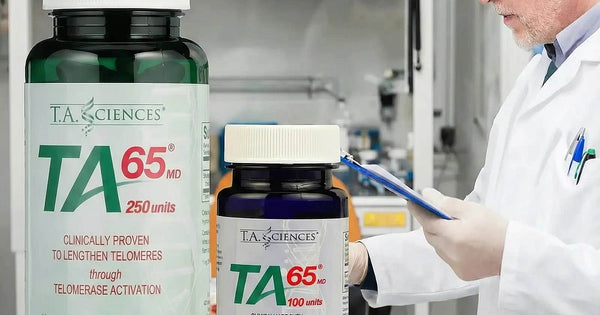
As corresponding author at Whittier College, with UCLA collaborator Rita B. Effros, he co-authored a 2013 Cells study evaluating TA-65 on human T-cell telomerase activity and proliferation (doi 10.3390/cells2010057). TA-65 used in that study was obtained from RevGenetics under TA Sciences licensing, per the paper.
The Aging Lymphocyte (Valenzuela H.F. & Effros R.B., 2012), chapter in Bone Marrow Lymphoid Infiltrates (Springer). doi 10.1007/978-1-4471-4174-7_2.
Acknowledged in Steven Fauce's April 14, 2008 UCLA talk Telomerase-Based Therapy for Enhancing Immunity (Los Angeles Gerontology Research Group) under Effros Lab.
His published work sits behind two of the compound categories RevGenetics formulates: the telomere lengthening science underlying TA-65 telomerase activators, and the T-cell inflammation work underlying trans-resveratrol.
Key Scientific Contributions
1. Measuring the "Clock": The TRF Assay
Dr. Valenzuela helped develop a refined version of the "Terminal Restriction Fragment (TRF) Assay." This method removed the error-prone blotting steps of older techniques, allowing researchers to measure telomere length faster and more directly.
2. Immunosenescence & Alzheimer's
His work demonstrated that telomere shortening in T-cells is not just a sign of aging but correlates with disease status. Specifically, he identified links between T-cell aging and Alzheimer's disease.
3. Divergent T-Cell Aging
He found that memory T-cells specifically lose "telomerase inducibility" (the ability to repair themselves) after repeated stimulation. This loss of repair capacity, alongside the decline of the CD28 marker, explains why the immune system weakens in the elderly.
Selected Peer-Reviewed Publications
Functional Assessment of Pharmacological Telomerase Activators in Human T Cells
This study investigates the effects of Astragalus root extracts, specifically TA-65, on telomerase activation in human T-cells. The findings demonstrate a significant increase in telomerase activity, suggesting potential therapeutic applications for delaying cellular aging and enhancing immune function in the elderly.
The Aging Lymphocyte
A comprehensive review of the molecular mechanisms driving lymphocyte aging. This chapter discusses the genetic and environmental factors contributing to immunosenescence and explores how these changes impact the overall health and disease susceptibility of the aging population.
O-Glycosylation Regulates LNCaP Prostate Cancer Cell Susceptibility
This research identifies a critical link between cell surface sugars (O-glycosylation) and cancer cell survival. By modifying these sugar structures, the study shows that prostate cancer cells can become more susceptible to apoptosis induced by Galectin-1, offering a potential new target for cancer therapy.
In vitro senescence of immune cells
This paper examines the phenomenon of replicative senescence in T-cells, where repeated immune stimulation leads to a permanent arrest in cell division. It discusses the biomarker CD28 and evaluates the potential of telomerase gene therapy to restore proliferative capacity in aging immune cells.
Telomere shortening in T cells correlates with Alzheimer’s disease status
A landmark study revealing that T-cells from Alzheimer's patients exhibit significantly shorter telomeres than age-matched controls. The findings suggest a systemic acceleration of immune aging in Alzheimer's disease, potentially serving as a biological marker for disease severity.
Divergent Telomerase and CD28 Expression Patterns in Human T Cells
This research differentiates how CD4 (helper) and CD8 (cytotoxic) T-cells age differently. It demonstrates that CD8 cells lose telomerase activity and CD28 expression much faster than CD4 cells upon repeated stimulation, explaining why the cytotoxic arm of the immune system weakens earlier in life.
Telomeres and Replicative Senescence (Methodology)
A technical protocol outlining the "in-gel hybridization" technique for measuring telomere length. This method allows researchers to assess the biological age of cells with high precision without the need for complex membrane transfers, streamlining the study of cellular aging.
Immunosenescence: Analysis and Genetic Modulation
One of Dr. Valenzuela's early foundational papers reviewing the irreversible arrest of T-cell division known as replicative senescence. It proposes forward-thinking genetic strategies to delay this process, laying the groundwork for future research into telomerase therapies.
Frequently Asked Questions
What is the "Cellular Clock" Dr. Valenzuela studies?
The "clock" refers to telomeres. Dr. Valenzuela compares these to the plastic tips on shoelaces. These DNA sequences protect chromosomes from unravelling. Every time a cell divides, the telomere shortens slightly, eventually causing the cell to stop dividing.
What did his lab discover about Resveratrol?
Using Jurkat cell lines to model T-cells, Dr. Valenzuela found that Resveratrol blocks the expression of Interleukin-2 (IL-2). Since IL-2 signals T-cells to proliferate, blocking it suggests Resveratrol acts as a dampener, reducing inflammation and preventing immune cells from becoming exhausted.
How does Cycloastragenol aid the immune system?
While Resveratrol helps with inflammation, Dr. Valenzuela found that Cycloastragenol (the active compound in TA-65 telomerase activator supplements) works on the "clock" itself. His 2013 study in Cells showed TA-65 increased telomerase activity 1.3 to 3.3-fold relative to controls in T cell cultures from six donors.
What is Dr. Valenzuela's role at RevGenetics?
Dr. Valenzuela is the Chief Science Officer (CSO). He holds this position while working as an active academic researcher and Fletcher Jones Chair in Molecular Biology at Whittier College. This dual role ensures RevGenetics products are supported by rigorous science.
What are the goals of Dr. Valenzuela's research?
Three: determine the mechanism for memory T-cell senescence; study the effect that memory T-cell exhaustion has on the immune system; and study natural compounds that alter the aging rate of cells.
How does telomere shortening affect immune function?
Telomere attrition in T-cells leads to replicative senescence, an irreversible arrest of cell division. His 2002 work in Clinical Immunology showed CD8 cells lose telomerase activity and CD28 expression faster than CD4 cells on repeated stimulation.